3rd year students have been working with compound nouns. Here you will find some of the presentations they have created.
Thursday, 17 October 2013

Tuesday, 15 October 2013
Fine as frog's hair

If something is as fine as frog's hair, it is very delicate and fine. The phrase is facetious as frogs do not possess hair.
Origin
This is an American simile and dates back to the mid 19th century. C. Davis's Diary of 1865 has this entry:
"I have a better flow of spirits this morning, and, in fact, feel as fine as frog's hair, as Potso used to say."
The allusion to the hairs on a frog clearly points us to the 'slender, narrow', meaning of the phrase. Just as clearly, frogs don't have hair, and the ironic reference to it is intended to highlight the effect. This is similar to the British simile 'as rare as rocking-horse shit' that is, nonexistent. The British also have a related vulgarism, which takes the implied smallness a step further - 'as small as the hairs on a gnat's bollock'.
The citation above plays with the meaning of the expression by using 'fine' to mean 'excellent - in high spirits'.
There is a lesser-known variant from the southern states - 'as slippery as frog hair'. This is used to denote money, especially that which is newly acquired; for example, from Time, February 1974:
"Disturbingly, many of the plaque owners were contractors or architects who stood to benefit from making political contributions - frog hair, as such funds are known... because, as old Sooners [Settlers who jumped the gun and arrived too soon to a claim] say, new money feels 'as slippery as frog's hair'."
Monday, 30 September 2013
Extracts and a short story (2 Part Project)
The first part of the project is to present extracts from your life or someone else’s life. Then, choose one moment from the extracts and write it as a small children’s story for primary children.
The extracts need to be presented with visuals (images/videos).
You should have 2 or 3 written extracts (approx. 200 words each).
For example, a chosen moment could be your first day of starting ESO and writing an entry into a diary, or a footballer scoring their first professional goal and writing a small news article. There are many possibilities!
The second part of the project is to write a children’s story for primary children (3rd/4th/5th). (Using the same examples as above) You could write a story about a first day of school or a footballer’s first match for a big team. The story doesn’t have to be completely true, make it exciting, but not a complete lie, because it needs to be related to your real extracts.

The template for the story should look something like this. The story doesn’t have to be that long, enough for a beginning, a middle and an end. It should be about 6 - 8 sides and putting in images also helps the children understand what is happening in the story.
Take a look at these sites...
PREZI – http://prezi.com/
DEADLINE: 28th October
The extracts need to be presented with visuals (images/videos).
You should have 2 or 3 written extracts (approx. 200 words each).
For example, a chosen moment could be your first day of starting ESO and writing an entry into a diary, or a footballer scoring their first professional goal and writing a small news article. There are many possibilities!
The second part of the project is to write a children’s story for primary children (3rd/4th/5th). (Using the same examples as above) You could write a story about a first day of school or a footballer’s first match for a big team. The story doesn’t have to be completely true, make it exciting, but not a complete lie, because it needs to be related to your real extracts.
The template for the story should look something like this. The story doesn’t have to be that long, enough for a beginning, a middle and an end. It should be about 6 - 8 sides and putting in images also helps the children understand what is happening in the story.
Take a look at these sites...
PREZI – http://prezi.com/
Presentation
website – visual interactive
presentations
Glosgster – http://edu.glogster.com
Presentation
website – visual ‘posters’
DEADLINE: 28th October
Monday, 23 September 2013
Thursday, 11 July 2013
A stitch in time saves nine. Phrase
This phrase means a timely effort will prevent more work later.
 The 'stitch in time' is simply the sewing up of a small hole or tear in a piece of material, so saving the need for more stitching at a later date when the hole has become larger. Clearly, the first users of this expression were referring to saving nine stitches.
The Anglo Saxon work ethic is being called on here. Many English proverbs encourage immediate effort as superior to putting things off until later; for example, 'one year's seeds, seven year's weeds', 'procrastination is the thief of time' and 'the early bird catches the worm'.
The 'stitch in time' is simply the sewing up of a small hole or tear in a piece of material, so saving the need for more stitching at a later date when the hole has become larger. Clearly, the first users of this expression were referring to saving nine stitches.
The Anglo Saxon work ethic is being called on here. Many English proverbs encourage immediate effort as superior to putting things off until later; for example, 'one year's seeds, seven year's weeds', 'procrastination is the thief of time' and 'the early bird catches the worm'.

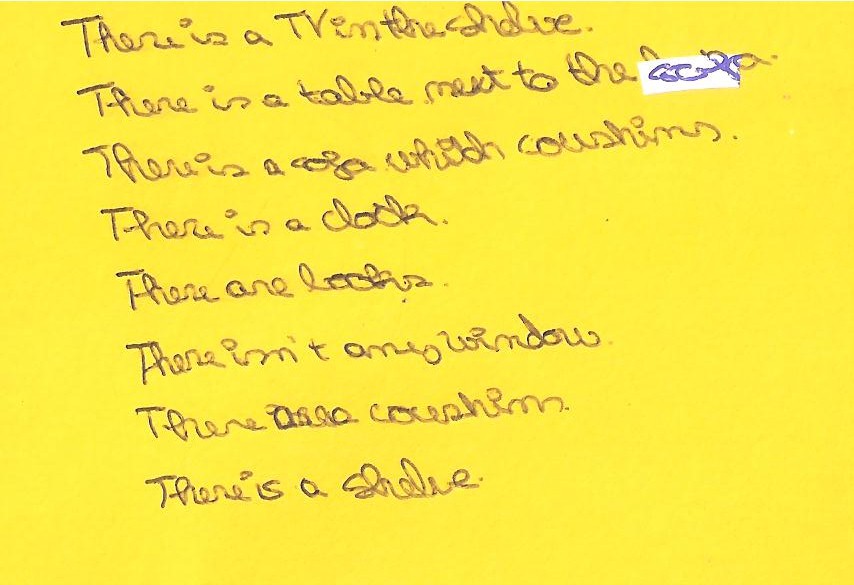
Descriptions.
An easy way to use prepositions in descriptions and the structure There is/there are. 1st eso students have written about rooms and have revised words related to objects in a house. Here are some examples.




Tuesday, 9 July 2013
Literature in English
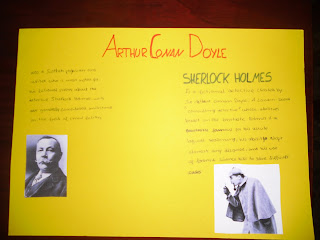
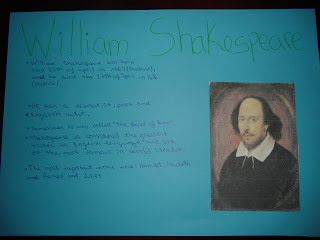
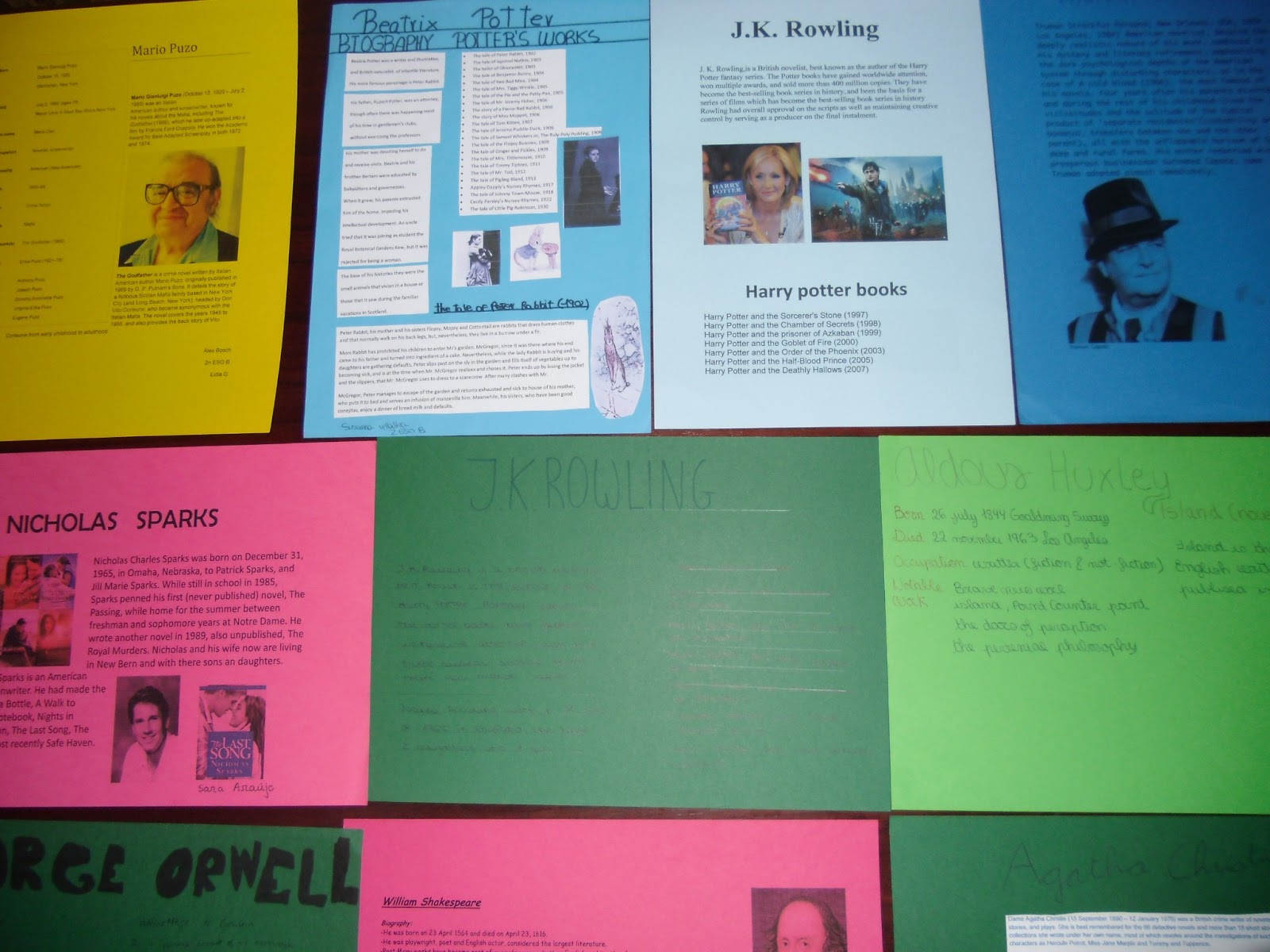
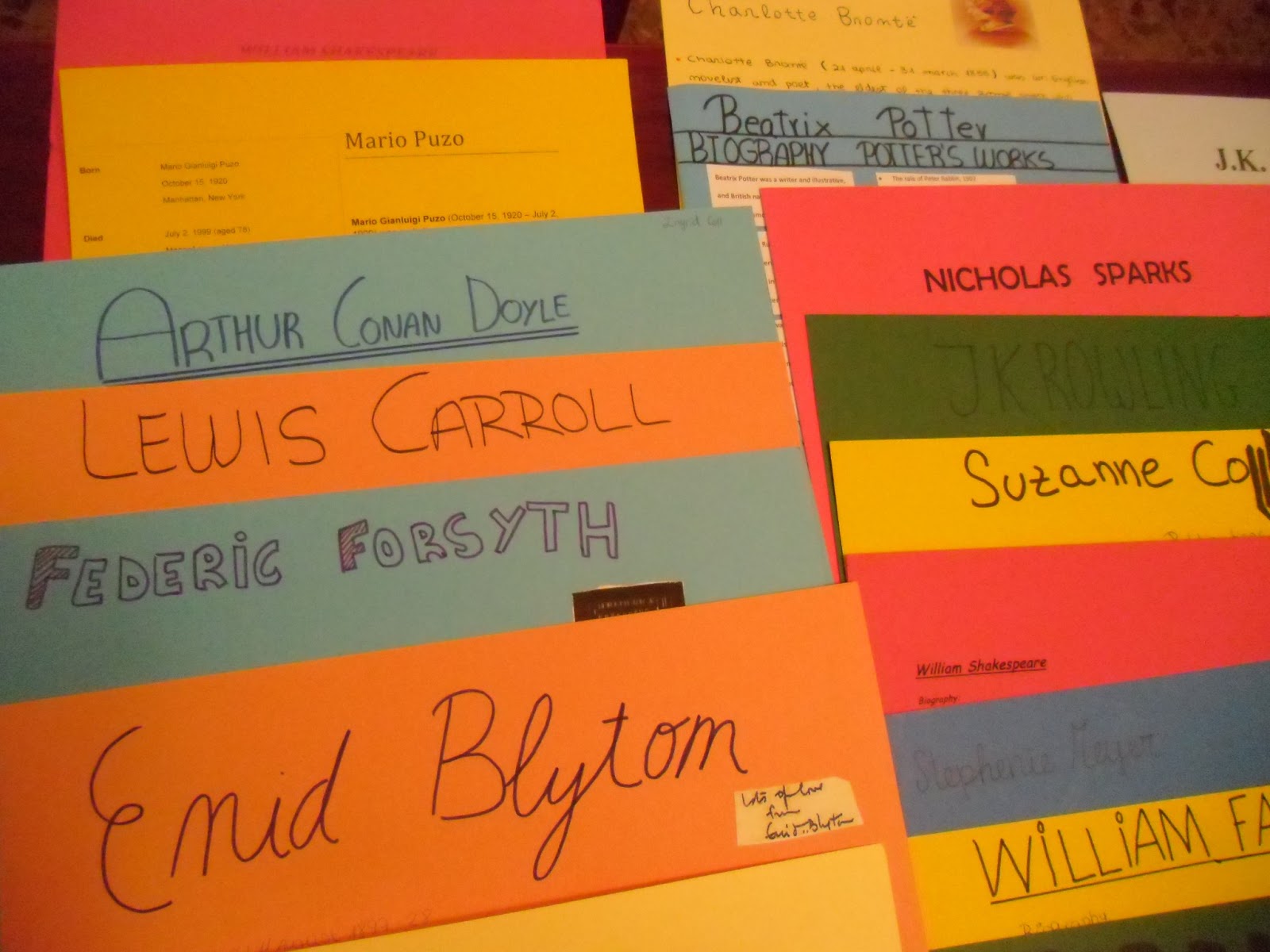
We obviously learn foreign languages by speaking but literature has helped people through ages and places, too. Literature in English (not only English literature but also American, African, Irish, Indian...) is a great example and 2nd year students have learned about different authors and their books.












Subscribe to:
Posts (Atom)